Key Takeaways
-
Always verify that your builder holds an active license and any claimed certifications before signing a contract.
-
Confirm that the builder carries valid insurance, including general liability and workers’ compensation, and request to be named as an additional insured.
-
Check references, past projects, and complaint history to assess workmanship, reliability, and professionalism.
-
Ensure the builder pulls all necessary permits and follows local building codes to avoid insurance or legal issues.
-
Include contract clauses that require proof of licensing, insurance, permits, and warranties throughout the project.
-
Watch for red flags such as large upfront payments, missing documentation, or unverified references, and pause negotiations if any appear.
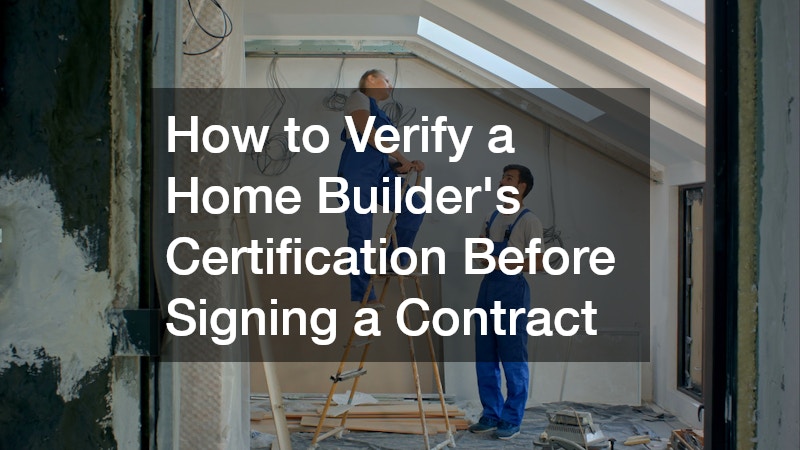
If you’re preparing to build or renovate a home, choosing certified and insured home builders is one of the most important decisions you’ll make. A certified home builder has proven credentials, licensing, and training that show they meet local and industry standards. An insured builder, meanwhile, carries the right coverage to protect you financially in case of accidents, property damage, or unfinished work.
This detailed guide explains how to verify a builder’s certification, confirm their insurance coverage, and ensure they comply with all construction and safety regulations before you sign any contract. By taking the time to follow these steps, you can save yourself from serious risks such as denied insurance claims, costly repairs, or legal disputes.
Why It’s Crucial to Work with Certified and Insured Home Builders
Hiring certified and insured home builders ensures your investment is protected from start to finish. Certification means the contractor has passed technical, safety, and ethical requirements set by governing agencies or professional associations. Insurance, on the other hand, guarantees that you’re not left liable for accidents or property damage during the construction process.
A certified home builder also gives you an advantage with your homeowner’s insurance provider. Insurance companies often consider the contractor’s credentials when assessing the safety and value of your property. If your home is built by a verified, certified builder who follows code, your insurer is less likely to deny future claims related to construction defects or code violations.
In contrast, working with an uncertified or uninsured contractor can create major financial problems. You could face denied claims, failed inspections, unapproved permits, and potential lawsuits if a worker gets injured on-site.
In short, a certified and insured home builder doesn’t just offer professional skill—they provide assurance that your project is legally compliant and financially protected.
Quick Verification Checklist for Certified and Insured Home Builders
Before signing a contract, make sure your builder can provide all of the following:
-
Active Contractor License: Issued by your local or state authority and valid for the type of work being performed.
-
Proof of Certification: Copies of professional credentials such as NAHB (National Association of Home Builders), LEED (Leadership in Energy and Environmental Design), or ENERGY STAR certification.
-
Certificate of Insurance: Evidence of general liability coverage, workers’ compensation, and—if applicable—commercial auto insurance.
-
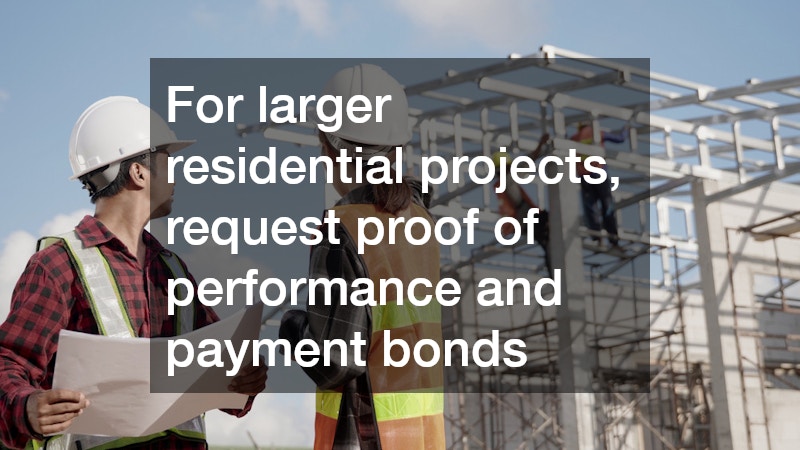
Bond Information: For larger residential projects, request proof of performance and payment bonds that protect you if the contractor defaults or fails to pay subcontractors.
-
Project References: At least three recent clients who can verify project quality, adherence to schedule, and communication skills.
-
Permit Documentation: A record of previously issued permits and inspection approvals for past projects.
-
Written Warranty: A document outlining workmanship guarantees, repair procedures, and coverage timelines.
Every legitimate contractor should be able to produce these documents quickly and willingly. If they hesitate, delay, or provide incomplete paperwork, take it as a warning sign.
Step 1: Request Complete Documentation
Certified and insured home builders should have no problem providing proof of their qualifications. Start your verification process by requesting copies of key documents.
-
Contractor’s License: This verifies that the builder is authorized to perform residential construction work in your state or province. Check that the license is current, not expired, and includes the correct classification (for example, residential general contractor).
-
Professional Certification: Ask for copies of training or professional development credentials. Builders with certifications from NAHB, LEED, or the Building Performance Institute (BPI) typically adhere to higher construction and safety standards.
-
Insurance Certificates: Request a Certificate of Insurance that lists the insurance carrier, policy number, coverage limits, and expiration dates. This document should name the builder’s business exactly as it appears in your contract.
-
Bond Documents: Performance and payment bonds are often used for larger or custom home projects. They provide financial protection if the builder fails to complete the work or pay subcontractors.
-
Warranty Samples and Contract Templates: Review how the builder handles defects, warranty claims, and repair procedures. Reputable builders offer clear, written policies.
These records form your foundation for further checks. Store digital and printed copies together with your project documentation.
Step 2: Verify the License and Professional Certification
Once you have copies of a builder’s license and certifications, it’s time to confirm that they’re legitimate. Each state and province maintains its own licensing authority, often available through an online search.
-
Use the State Licensing Board Website:
-
Visit your local contractor licensing board website.
-
Search using the builder’s name or license number.
-
Confirm that the license is active, properly classified, and free of disciplinary actions.
-
Note the expiration date and renewal history to ensure it’s up-to-date.
-
-
Call or Email the Licensing Agency:
-
If no online tool is available, contact the office directly.
-
Ask about any suspensions, fines, or pending complaints related to the builder.
-
-
Check Certification Organizations:
-
Visit the NAHB, LEED, ENERGY STAR, or other relevant organization directories.
-
Search the builder’s name or certification number to confirm membership or credential status.
-
Review certification type (e.g., Green Professional, Certified Aging-in-Place Specialist) to verify their expertise.
-
-
Confirm Specialty Credentials:
-
Builders offering eco-friendly or energy-efficient construction should have up-to-date certifications in sustainability programs.
-
Specialized builders—like modular or custom home contractors—may hold additional trade certifications recognized by insurers.
-
Verifying these credentials ensures that you’re working with certified and insured home builders who meet both professional and legal standards.
Step 3: Verify Insurance Coverage and Policy Validity
Insurance verification is one of the most overlooked steps in hiring certified and insured home builders. Even a certified contractor might have lapsed or inadequate coverage. Always confirm details directly with the insurer.
-
Review the Certificate of Insurance Carefully:
-
Policyholder Name: The insured name must match the business name on your contract.
-
Coverage Types: Look for general liability, workers’ compensation, and (if applicable) commercial vehicle insurance.
-
Policy Limits: For residential projects, liability coverage should typically be at least $1 million per occurrence.
-
Effective Dates: Ensure the policy will remain valid through the entire duration of your build.
-
-
Contact the Insurance Provider:
-
Call the insurance company listed on the certificate.
-
Ask them to confirm that the policy is active and issued to the builder.
-
Request to be listed as an “additional insured” to receive updates if the policy lapses.
-
-
Understand the Bonding Process:
-
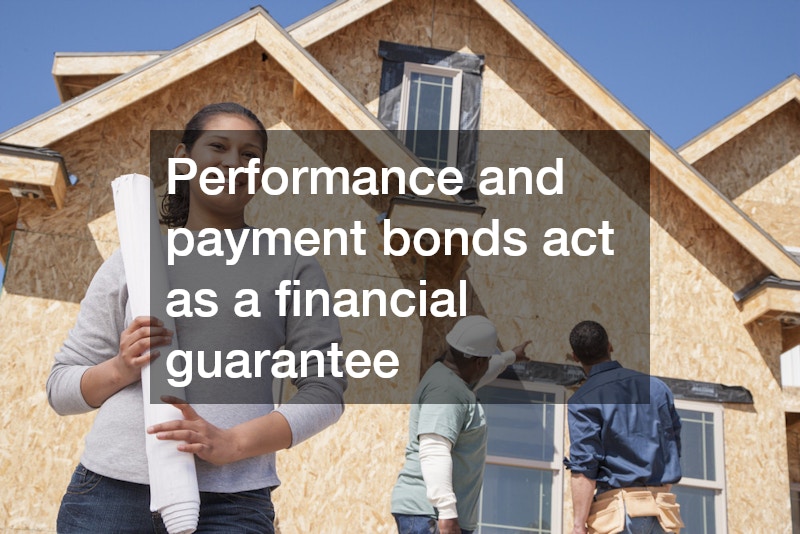
Performance and payment bonds act as a financial guarantee.
-
Verify the bond’s authenticity by contacting the surety company listed on the bond.
-
Request written confirmation that the bond number, amount, and builder name are valid.
-
Having this insurance and bond verification helps ensure that you’re covered if property damage, accidents, or unfinished work occur during construction.
Step 4: Review References, Past Work, and Complaint History
Certified and insured home builders should have a strong portfolio of completed projects and satisfied customers. References give you valuable insight into how the builder operates on real job sites.
-
When Contacting References, Ask:
-
Was the project completed on time and within budget?
-
Did the builder communicate clearly about schedule changes or issues?
-
Were there any disputes or problems with subcontractors or materials?
-
Has the homeowner used the warranty since completion, and was it honored quickly?
-
Would they hire the builder again?
-
-
Inspect Past Work:
-
Visit finished homes if possible. Examine craftsmanship, paintwork, framing, and finishing details.
-
Look for consistency in material quality and installation methods.
-
-
Check Online and Public Records:
-
Search online reviews on multiple platforms—Google, Yelp, BBB, Houzz, and local directories.
-
Check the Better Business Bureau for unresolved complaints.
-
Review your state contractor board’s disciplinary database for warnings or revoked licenses.
-
Search civil court records to ensure there are no outstanding lawsuits.
-
A history of clear communication, solid workmanship, and satisfied clients is one of the best indicators that you’re working with certified and insured home builders who value professionalism.
Step 5: Confirm Permit Records and Code Compliance
Building permits are another crucial element in verifying your contractor’s legitimacy. Certified and insured home builders pull all necessary permits before beginning work, ensuring compliance with local codes and inspection standards.
-
Check the Builder’s Permit History:
-
Visit your local building department’s website and search for previous projects by the builder’s name.
-
Verify that permits were issued, inspections passed, and projects were closed properly.
-
Ensure they’ve worked on similar types of homes or remodels before.
-
-
Confirm Permit Responsibilities:
-
Your contract should clearly state who is responsible for obtaining permits.
-
Never agree to “owner permits” where the contractor avoids responsibility—it can void insurance and cause resale problems.
-
-
Ask About Inspection Practices:
-
Certified home builders welcome inspections because they understand compliance protects both the homeowner and the builder.
-
Verify that your contractor follows the standard inspection process, including structural, electrical, and plumbing reviews.
-
Proper permitting ensures your construction project remains legally recognized and insurable. Insurers often deny coverage for homes built without approved permits or inspections.
Step 6: Strengthen Your Contract
Before signing anything, make sure your written agreement includes strong protection clauses. Contracts with certified and insured home builders should clearly define responsibilities, proof of credentials, and procedures for changes or disputes.
-
Include These Clauses:
-
Proof of Insurance: Require updated Certificates of Insurance before work begins and upon each policy renewal.
-
License Maintenance: Specify that the builder must maintain an active license for the project’s duration.
-
Indemnity Clause: The builder agrees to cover any damages or claims resulting from their negligence.
-
Permit Responsibility: The contractor must secure and pay for all permits.
-
Change Orders: Any project alterations must be documented, signed, and cost-approved before execution.
-
Warranty Coverage: Outline the warranty term (typically one year minimum) and procedures for repair or replacement.
-
Notification of Lapse: Require written notice if insurance, bond, or license status changes during the project.
-
Contracts written with clear terms give you legal leverage and ensure that your builder remains compliant with all insurance and certification standards.

Red Flags When Dealing with Builders
If you encounter any of the following warning signs, reconsider moving forward:
-
The builder demands large upfront payments exceeding 30–50% of the project cost.
-
They avoid giving license or insurance details.
-
The license is expired or registered under a different name.
-
References appear vague or unverified.
-
There’s a lack of documented permits for past projects.
-
Communication is inconsistent or overly rushed.
Trustworthy certified and insured home builders will be transparent about credentials and happy to prove their qualifications.
Helpful Scripts and Contract Examples
Phone Script (License Verification):
“Hello, I’m checking the license status of a builder named [Name], license number [#]. Could you confirm whether it’s active and if any disciplinary actions have been filed?”
Email Template (Insurance Request):
“Hi [Builder Name],
Before we finalize the agreement, could you please send a current Certificate of Insurance showing liability and workers’ compensation coverage, including policy limits and expiration dates? Thank you.”
Sample Contract Clause (Insurance):
“The contractor shall maintain general liability coverage of not less than $1,000,000 per occurrence and workers’ compensation insurance as required by law. Proof of insurance shall be provided to the owner prior to the start of work.”
Frequently Asked Questions
Can a builder be certified but not insured?
Yes, some contractors may maintain certifications but let insurance lapse. Always verify both separately.
What if the builder’s insurance expires mid-project?
The builder must renew and provide proof immediately. Include a contract clause requiring continuous coverage.
Does using certified and insured home builders affect my mortgage or lender requirements?
Yes. Many lenders require proof that your contractor is licensed and insured before releasing construction funds.
What if I discover my builder’s license is suspended after work begins?
Pause construction immediately and contact your local licensing board. Working with an unlicensed contractor could invalidate your homeowner’s insurance coverage.
Choosing certified and insured home builders is one of the smartest long-term decisions a homeowner can make. It safeguards your finances, ensures construction quality, and protects your legal rights. Verification may take time, but it’s worth every step—because the cost of skipping it can be devastating.
Before signing a contract:
-
Confirm the builder’s license and certifications with official agencies.
-
Verify insurance and bond coverage directly with carriers.
-
Review references, permit histories, and inspection records.
-
Strengthen your contract with protective clauses.
By verifying your builder’s certification and insurance before construction begins, you’re not just building a home—you’re building a secure foundation for your family’s future.